Quick Summary: Disposing of dirt and soil from landscaping or construction projects requires proper planning. Dirt is heavy (1.5-2 tons per cubic yard), making specialized disposal methods essential. This guide covers all disposal options, from dumpster rental to recycling.
Why Proper Dirt Disposal Matters
Let me tell you something I learned the hard way: dirt is heavy. Like, really heavy. I've seen people make expensive mistakes trying to dispose of dirt the wrong way, and I've been one of those people. Trust me, understanding how to dispose of dirt properly will save you money and headaches.
Proper dirt disposal is important for several reasons, and I'm not just talking about convenience here:
- Weight considerations: Dirt is extremely heavy - standard disposal methods may not work. I tried using a regular dumpster once for a landscaping project. Big mistake. The weight fees were insane.
- Cost efficiency: Wrong disposal method can result in expensive fees. I've seen people pay hundreds of dollars in overage fees because they didn't plan ahead. Don't be that person.
- Environmental impact: Clean dirt can be recycled, reducing waste. This is actually pretty cool - clean dirt is valuable and can be reused. We try to recycle it whenever possible.
- Legal compliance: Some areas have regulations about soil disposal. I know, it's annoying, but getting caught dumping dirt illegally is way more annoying and expensive.
- Space management: Large amounts of dirt need proper handling. You can't just pile it up in your yard forever - trust me, I've tried.
Dirt Disposal Methods: Which is Right for You?
I've tried just about every method for disposing of dirt, and let me tell you - some work way better than others. Here's what I've learned from doing this more times than I care to admit.
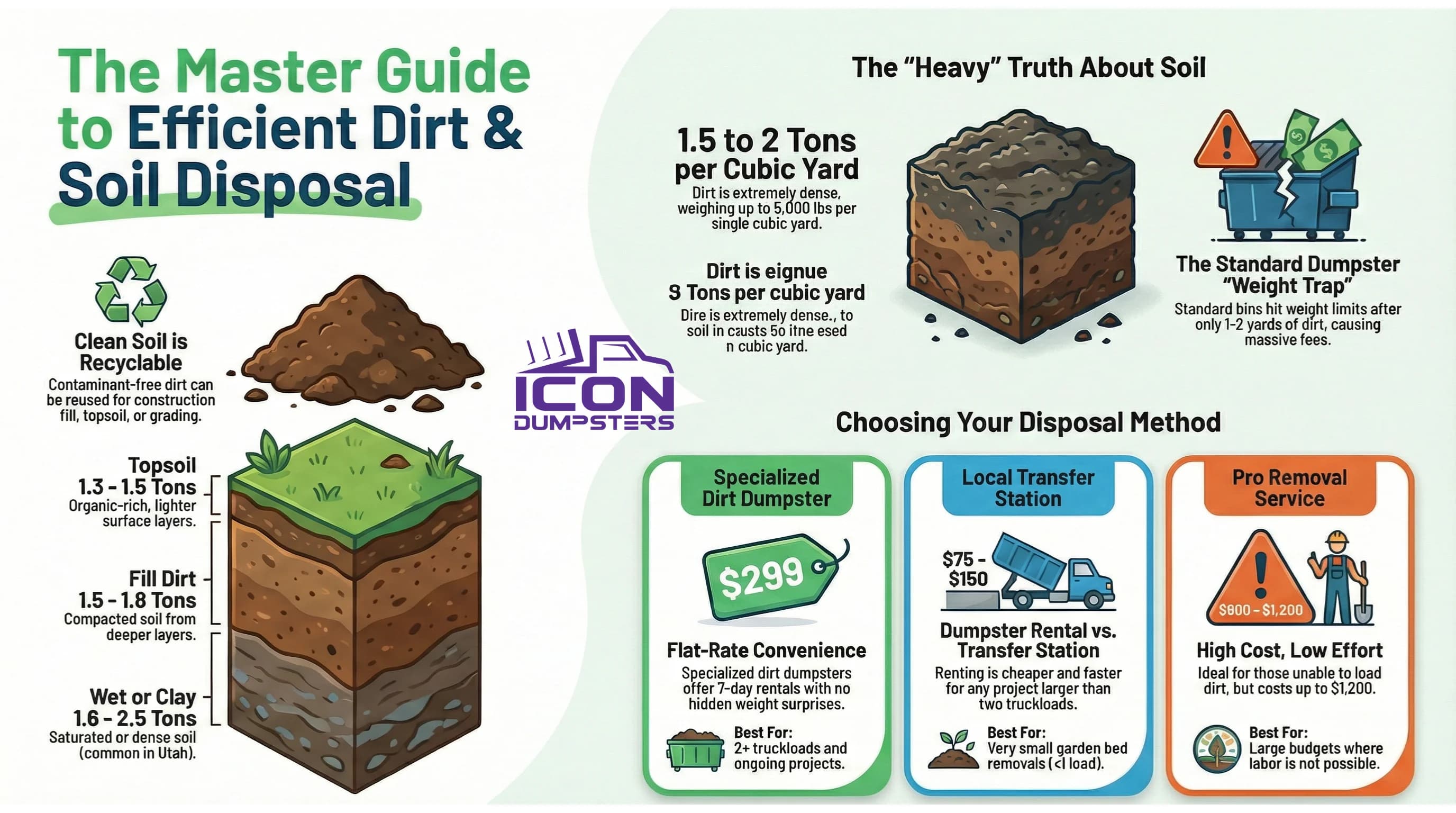
Soil and Dirt Removal Process Guide (hover to enlarge)
Method 1: Specialized Dirt Dumpster Rental (Recommended)
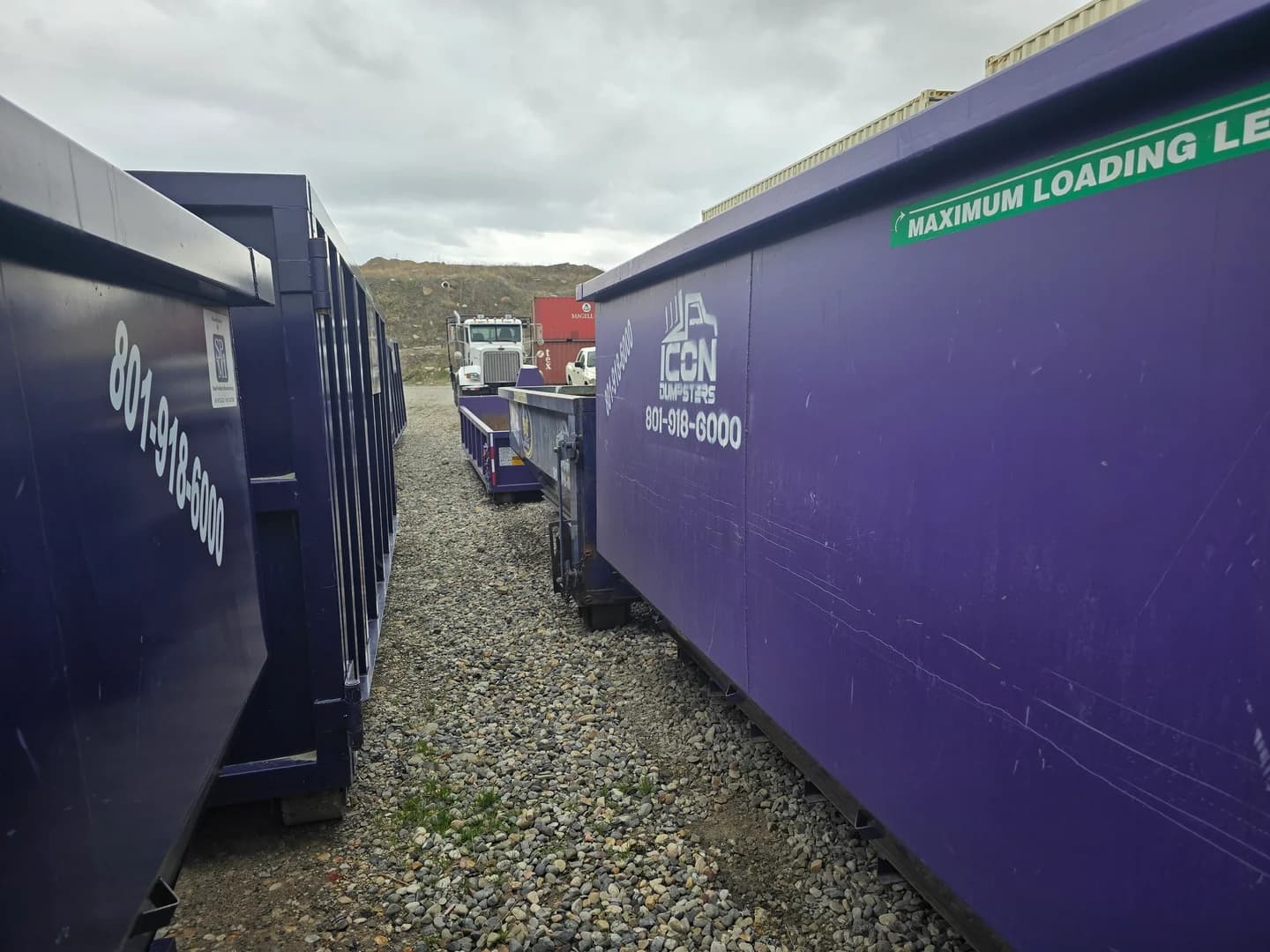
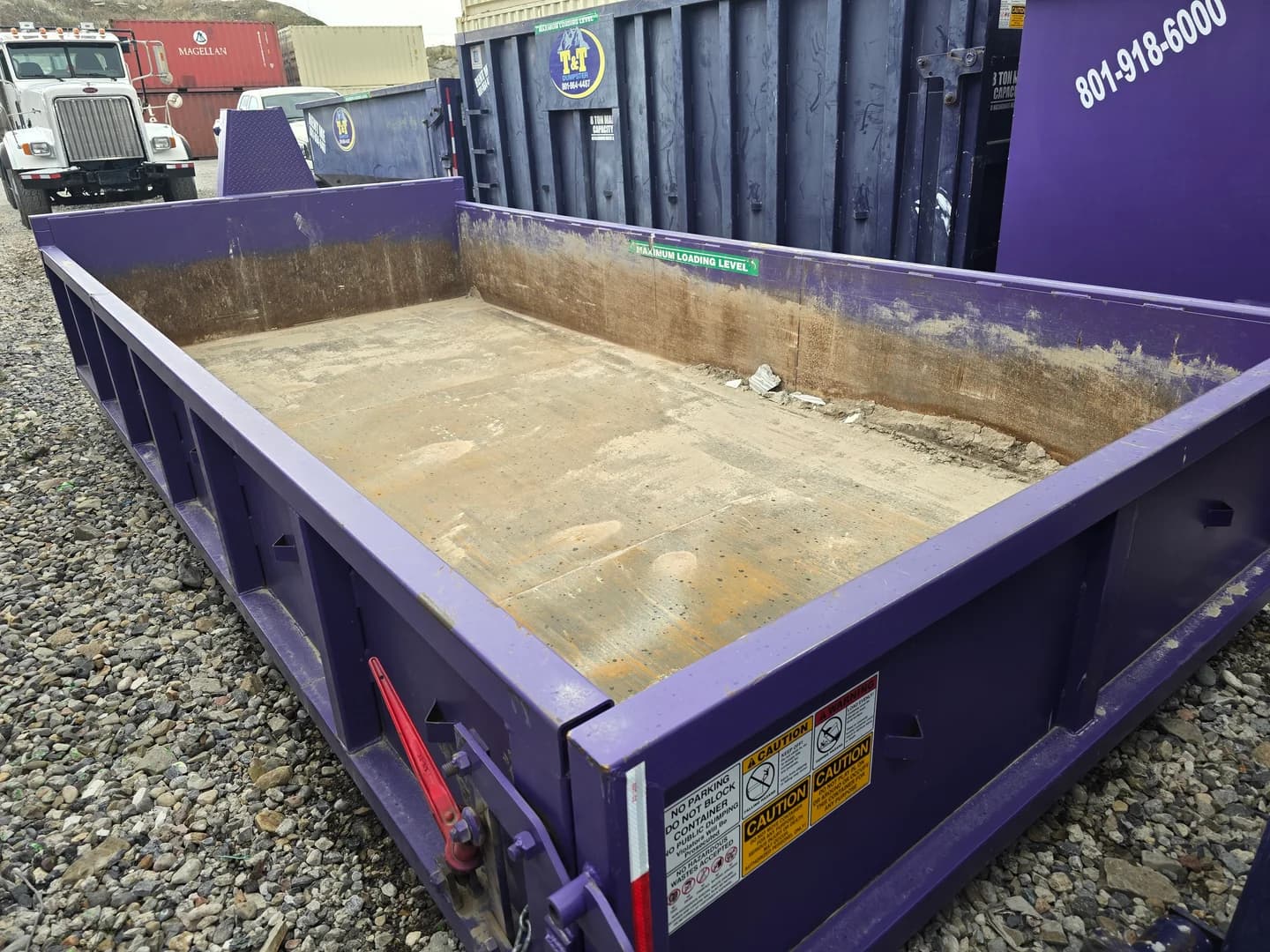
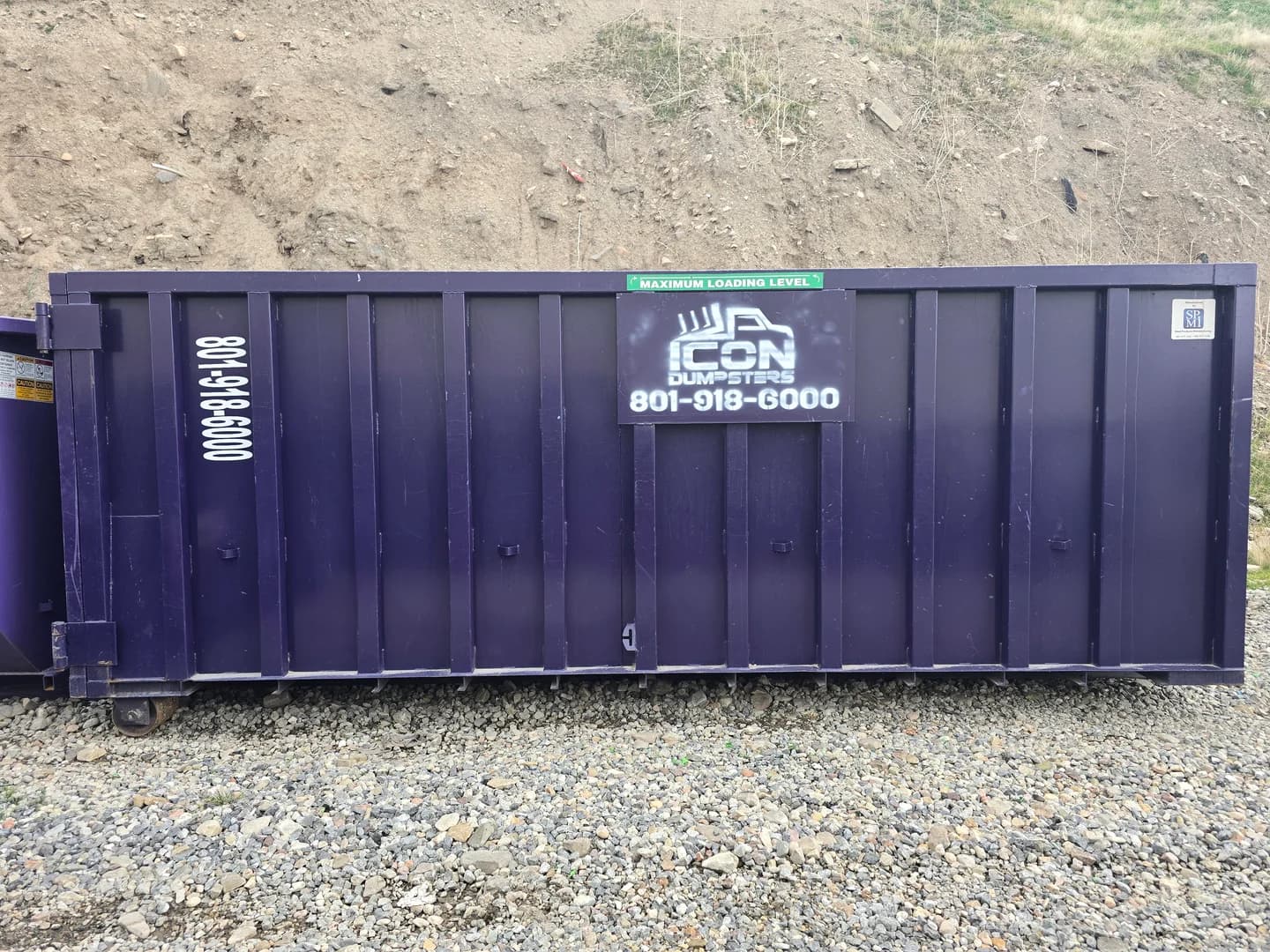
Renting a specialized dirt dumpster is the best option for most projects. I know, I'm biased because I work here, but honestly, after trying all the other methods, this is what I'd recommend to anyone.
Benefits of Dirt Dumpster Rental:
- • No weight limits: Fill it completely without worrying about overweight fees. This is huge - I've seen people pay $200-$300 in overage fees on regular dumpsters. With our dirt dumpster, you fill it up and that's it. No surprises.
- • Flat-rate pricing: Our 10-yard dirt dumpster costs $299 for 7 days - no surprises. You know exactly what you're paying upfront. I love that.
- • Convenience: Dumpster delivered to your location, pickup when full. You don't have to load up your truck, drive to the transfer station, unload, and repeat. It's all right there.
- • Perfect size: Holds 8-10 cubic yards (12-20 tons) of dirt. That's enough for most landscaping projects or small excavations. For bigger projects, we can coordinate multiple pickups.
- • Recycling coordination: We help coordinate dirt recycling when possible. Clean dirt is valuable, and we try to recycle it whenever we can. It's better for the environment and sometimes saves you money.
I'll be honest - I tried to save money once by using a regular dumpster for dirt. That was a mistake. The weight fees were way more than just renting a dirt dumpster would have cost. Learn from my mistakes.
Method 2: Transfer Station (Small Projects Only)
For very small amounts of dirt (less than one truckload), you can take it to a local transfer station. I've done this for small projects, and it works fine if you only have a little bit of dirt.
- Cost: $25-$50 per truckload. This seems cheap, but it adds up fast if you need multiple trips. Plus, you're paying for gas, your time, and wear on your truck.
- Best for: Small yard projects, garden bed removal. If you're just removing a small garden bed or doing a tiny landscaping project, this might work. But once you get past one truckload, it's not worth it.
- Limitations: Requires truck, multiple trips for larger projects. You need a truck, and you need to be able to load and unload it yourself. For bigger projects, you'll be making multiple trips, and that gets old fast.
- Time: Must load, drive, unload yourself. This takes time, and your time is worth something. I've spent whole days making multiple trips to the transfer station. Not fun.
Note: For 2+ truckloads, dumpster rental is more cost-effective and convenient. I learned this the hard way - after my third trip to the transfer station, I wished I'd just rented a dumpster.
Method 3: Professional Dirt Removal Service
Professional services will come and remove dirt for you. I've hired these services before, and they're convenient, but man, they're expensive.
- Cost: $200-$400 per truckload. This adds up fast. If you have 3-4 truckloads, you're looking at $600-$1,600. That's way more than a dumpster rental would cost.
- Best for: When you don't want to handle disposal yourself. If you're not physically able to load dirt, or you just don't want to deal with it, this is an option. But it's expensive.
- Limitations: Expensive for multiple loads, must schedule pickup. You have to schedule ahead, and if your project takes longer than expected, you might need multiple pickups. Each one costs.
- Convenience: They handle everything, but costs add up quickly. I hired a service once for a big project, and by the time I was done, I'd spent way more than I would have with a dumpster. Live and learn.
The bottom line? If you can load dirt yourself, a dumpster is way cheaper. If you can't, professional service works, but it's expensive. There's no way around it.
Method 4: Dirt Recycling and Reuse
Here's something a lot of people don't know - clean dirt can often be recycled or reused. I didn't know this until I got into this business, but it's actually pretty cool.
- Fill material: Used for construction fill and grading. Clean dirt is valuable for construction projects - it can be used as fill material for foundations, road base, or grading work. I've seen clean dirt get reused on construction sites.
- Topsoil: Clean dirt can be processed into topsoil. If the dirt is clean enough, it can be processed and sold as topsoil. This is better than just dumping it in a landfill.
- Landscaping: Reused in other landscaping projects. One person's excess dirt is another person's landscaping material. We try to connect people when possible.
- Environmental benefit: Reduces waste and conserves resources. Recycling dirt keeps it out of landfills and reduces the need to extract new material. It's good for the environment, and sometimes it saves money too.
When you rent our dirt dumpster, we coordinate recycling whenever possible. Not all dirt can be recycled (it has to be clean), but when it can be, we try to make that happen.
I like knowing that the dirt I'm disposing of isn't just going to sit in a landfill forever. Recycling makes sense, and it's something we should all try to do when we can.
Understanding Dirt Weight: Why Specialized Dumpsters Matter
This is where a lot of people get tripped up. Dirt is extremely heavy, which is why specialized disposal is essential. I've seen people try to use regular dumpsters for dirt, and it never ends well.
Let me break down the weight for you, because this is important to understand:
Dirt Weight Per Cubic Yard
Topsoil
1.3-1.5 tons per cubic yard (2,600-3,000 pounds)
Lighter, organic-rich soil from surface layers. This is what you usually find in garden beds.
Fill Dirt / Subsoil
1.5-1.8 tons per cubic yard (3,000-3,600 pounds)
Heavier, compacted soil from deeper layers. This is what you usually get from excavation work.
Wet or Compacted Dirt
2.0-2.5 tons per cubic yard (4,000-5,000 pounds)
Saturated or heavily compacted soil. If it's been raining, or if it's been compacted, it's even heavier.
Clay Soil
1.6-2.0 tons per cubic yard (3,200-4,000 pounds)
Dense clay soil common in Utah. We see a lot of this around here, and it's heavy stuff.
⚠️ Why Standard Dumpsters Don't Work
Standard dumpsters have 2-5 ton weight limits. Dirt fills only 1-2 cubic yards before hitting the limit, resulting in expensive overage fees ($45-$68 per additional ton). I learned this the expensive way - I tried using a regular dumpster for dirt once, and the overage fees were more than the dumpster rental itself. Our specialized dirt dumpster has no weight limits and uses flat-rate pricing, making it much more cost-effective.
Here's the thing - a regular 10-yard dumpster might hold 2-3 tons of regular trash. But dirt? You'll hit that weight limit with just 1-2 cubic yards of dirt. That means you're paying for a 10-yard dumpster but can only use 10-20% of it. That's a waste of money.
Common Dirt Disposal Scenarios
I've seen dirt disposal come up in all kinds of projects. Let me walk you through the most common scenarios and what I've learned from each one.
Landscaping Projects
Landscaping projects often generate dirt that needs disposal. I've done a lot of landscaping work, and there's always dirt to deal with.
- Garden bed removal: Removing old soil from garden beds. Maybe you're redoing your garden, or maybe you're removing it entirely. Either way, you've got dirt to get rid of.
- Yard renovation: Disposing of dirt from yard grading or leveling. I've done this - you're leveling your yard, and suddenly you've got a pile of dirt with nowhere to put it.
- Landscaping cleanup: Removing excess dirt from landscaping projects. Sometimes you order too much dirt, or sometimes you're removing old landscaping and there's dirt left over.
- Topsoil replacement: Disposing of old topsoil when replacing. Maybe the old topsoil isn't good anymore, or maybe you're upgrading to better soil. Either way, you need to get rid of the old stuff.
Our dirt dumpster rental is perfect for landscaping projects, offering convenient disposal with flat-rate pricing. I've used it for my own landscaping projects, and it makes everything so much easier.
Excavation Work
Excavation projects generate large amounts of dirt. This is where things get serious - excavation work produces a lot of dirt, and you need a plan for dealing with it.
- Foundation excavation: Dirt from digging foundations. I've seen foundation excavations produce 20-30 cubic yards of dirt. That's a lot of dirt to deal with.
- Basement digging: Soil removal for basement construction. Basements are big, and digging one produces a lot of dirt. You need a plan for this.
- Utility installation: Dirt from trenching for utilities. Even smaller utility trenches produce more dirt than you think. I've seen people underestimate this and end up with dirt everywhere.
- Site preparation: Grading and leveling for construction. Before you can build, you need to prepare the site, and that often means moving a lot of dirt.
For large excavation projects, multiple dumpsters or scheduled pickups may be needed. We can coordinate delivery and pickup around your excavation schedule. I've worked with contractors on big projects, and we can make it work around your timeline.
Grading and Leveling Projects
Grading projects often produce excess dirt. Sometimes you're bringing in dirt, sometimes you're taking it out. Either way, you need to deal with it.
- Site grading: Removing excess dirt from grading work. You're grading a site, and there's more dirt than you need. What do you do with it?
- Land leveling: Disposing of dirt from leveling projects. Leveling land often means removing high spots, and that dirt has to go somewhere.
- Drainage work: Dirt removal for drainage improvements. Improving drainage often means moving dirt around, and sometimes you end up with excess dirt.
The key with all of these is planning ahead. Know where your dirt is going before you start digging. Trust me on this one - I've seen projects delayed because people didn't plan for dirt disposal.
Cost Comparison: Dirt Disposal Methods
Let's talk money, because that's usually what people care about most. I'm going to break down the costs for disposing of 10 cubic yards of dirt - that's a pretty typical amount for a landscaping project or small excavation.
I've used all these methods, so I can give you real numbers based on what I've seen:
Cost Comparison (10 cubic yards of dirt):
| Method | Cost | Notes |
|---|---|---|
| Dirt Dumpster Rental | $299 (7 days) | Flat-rate, no weight limits, most convenient. This is what I'd recommend for most projects. |
| Transfer Station (3 trips) | $75-$150 | Plus fuel, time, vehicle wear - less convenient. This seems cheaper, but factor in your time and gas. |
| Professional Removal (3 loads) | $600-$1,200 | Most expensive, but most convenient. They do everything, but it costs. |
Note: For 2+ truckloads, dumpster rental is typically the most cost-effective option. I've done the math, and once you get past one truckload, the dumpster is cheaper and way more convenient.
Here's the thing - the transfer station might seem cheaper at first, but you're not factoring in your time, gas, and wear on your truck. If you make $50 an hour and it takes you 3 hours to make 3 trips, that's $150 of your time. Plus gas, plus wear on your truck. The dumpster starts looking pretty good.
And professional removal? It's convenient, but it's expensive. I've hired these services before, and they're great if you can't do it yourself, but the costs add up fast.
Clean Dirt vs. Contaminated Soil
This is important, and a lot of people don't understand the difference. Understanding the difference is crucial for proper disposal, and it can save you a lot of money and headaches.
I've seen people try to dispose of contaminated soil in regular dumpsters, and that's a problem. It's not just about cost - it's about safety and legality too.
Clean Dirt (Accepted)
Clean dirt is soil that's free of contaminants, chemicals, and hazardous materials. This is what we accept in our dirt dumpster:
- • Clean fill dirt - dirt that's been dug up and is free of contaminants
- • Topsoil - the good stuff from the surface, free of chemicals
- • Subsoil - deeper soil that's clean
- • Sand and gravel - clean sand and gravel are fine
- • Clay (clean) - clean clay soil is acceptable
- • Free of contaminants - no chemicals, no oil, no paint, nothing hazardous
- • Can be recycled - clean dirt can be reused, which is better for the environment
Contaminated Soil (Not Accepted)
Contaminated soil contains pollutants, chemicals, or hazardous materials. This requires special disposal and cannot go in our dumpster:
- • Soil with chemicals - if there's been chemical spills or contamination
- • Oil-contaminated soil - soil that's been contaminated with oil or fuel
- • Paint-contaminated soil - soil with paint or paint-related chemicals
- • Soil with hazardous materials - anything hazardous requires special handling
- • Requires special disposal - contaminated soil must go to licensed facilities
- • Must use licensed facilities - you can't just dump this anywhere
If you're not sure whether your dirt is clean or contaminated, ask. It's better to ask upfront than to have problems later. I've seen people try to dispose of contaminated soil, and it always causes issues. Don't be that person.
Preparing Dirt for Disposal
Here's something I've learned - a little preparation goes a long way. To ensure smooth disposal, take some time to prepare your dirt properly. It'll make everything easier.
- Remove debris: Remove rocks larger than 6 inches, roots, and organic matter. Big rocks take up space and add weight. Roots and organic matter can cause problems. I've seen dumpsters rejected because of too much organic matter mixed in.
- Keep it clean: Ensure dirt is free of contaminants, chemicals, or hazardous materials. This is important - contaminated dirt can't go in our dumpster. Check it before you load it.
- Break up clumps: Loosen compacted dirt for easier loading. Compacted dirt is harder to load and takes up more space. Break it up if you can - it'll make loading easier and you'll fit more in.
- Keep it dry: Wet dirt is heavier and harder to handle. If it's been raining, wait for it to dry if you can. Wet dirt weighs more, and it's a pain to load. Plus, it's messy.
- Separate if needed: Keep clean dirt separate from mixed materials. If you have clean dirt and other materials, keep them separate. Mixing them can cause problems, and you might not be able to recycle the dirt if it's mixed with other stuff.
I know, this seems like extra work. But trust me - taking a little time to prepare your dirt properly will save you time and headaches later. I've learned this the hard way.
Dirt Recycling: Environmental Benefits
Here's something I think is pretty cool - clean dirt can be recycled and reused. I didn't know this until I got into this business, but it's actually a big deal.
Clean dirt can be recycled and reused, providing environmental benefits:
- Reduces landfill waste: Keeps valuable material out of landfills. Dirt takes up a lot of space in landfills, and there's no reason to waste it if it's clean and can be reused.
- Conserves resources: Reuses existing material instead of extracting new. Instead of digging up new dirt, we can reuse what's already been dug up. That's better for the environment.
- Cost savings: Recycled dirt may cost less to dispose of. Sometimes recycling is cheaper than landfill disposal. It depends on the situation, but it's worth asking about.
- Sustainability: Supports environmentally responsible practices. Recycling dirt is the right thing to do, and it's something we should all try to do when we can.
When you rent our dirt dumpster, we coordinate recycling whenever possible. This helps reduce environmental impact and may provide cost savings. Not all dirt can be recycled (it has to be clean), but when it can be, we try to make that happen.
I like knowing that the dirt I'm disposing of isn't just going to sit in a landfill forever. Recycling makes sense, and it's something we should all try to do when we can.
Tips for Efficient Dirt Disposal
I've learned a lot about dirt disposal over the years, and I've made plenty of mistakes. Here are some tips that'll help you avoid the mistakes I've made:
Pro Tips:
- • Rent dumpster early: Have dumpster on-site before starting work. I've made the mistake of starting work before I had a dumpster, and then I had dirt everywhere with nowhere to put it. Don't do that.
- • Load efficiently: Distribute weight evenly in dumpster. Don't dump everything in one corner - spread it out. This helps with weight distribution and makes the dumpster easier to pick up.
- • Keep it clean: Only clean dirt in clean dirt dumpster. If you mix in other materials, you might not be able to recycle it, and it could cause problems. Keep it clean.
- • Plan for volume: Dirt compacts - you may have more than expected. Dirt takes up less space when it's loose, but it compacts when it's loaded. You might have more dirt than you think. Plan for that.
- • Consider recycling: Ask about recycling options when renting. Clean dirt can be recycled, and it's better for the environment. Ask about it when you rent - it might save you money too.
- • Time it right: Schedule pickup when dumpster is full. Don't call for pickup when it's half full - wait until it's full. You're paying for the full dumpster, so use it.
These might seem like small things, but they add up. A little planning goes a long way, and it'll save you time and money in the long run.
When to Use a Dirt Dumpster vs. Other Methods
This is the question I get asked most, and honestly, there's no one-size-fits-all answer. But I can give you some guidelines based on what I've learned.
Choose Dirt Dumpster Rental If:
- • You have 2+ truckloads of dirt. Once you get past one truckload, the dumpster is usually cheaper and way more convenient. I've done the math, and it's almost always worth it.
- • Project is ongoing (landscaping, excavation). If you're doing work over several days, having a dumpster on-site is way better than making multiple trips to the transfer station.
- • You want convenience and cost-effectiveness. The dumpster is convenient - it's right there, you load it as you go, and when it's full, you call for pickup. No driving, no unloading, no hassle.
- • You need time to fill (7 days included). You get 7 days with the dumpster, which gives you plenty of time to fill it. No rushing, no stress.
- • You want flat-rate pricing with no surprises. You know exactly what you're paying upfront. No overage fees, no surprises. I love that.
Choose Transfer Station If:
- • You have less than one truckload. If you only have a little bit of dirt, the transfer station might make sense. But once you get past one truckload, the dumpster is usually better.
- • You have a truck and want to save money. If you have a truck and you're willing to make the trips, you might save some money. But factor in your time, gas, and wear on your truck.
- • It's a one-time small project. If it's a small, one-time project and you only have a little dirt, the transfer station might work. But for anything bigger, I'd go with the dumpster.
The key is being honest with yourself about what you can handle. If you have a truck and you're willing to make multiple trips, the transfer station might work for small projects. But for anything bigger, or if you want convenience, the dumpster is the way to go.
Conclusion
Alright, we've covered a lot here. Proper dirt disposal requires understanding weight, costs, and disposal methods. It's not as simple as just "getting rid of dirt" - there's a right way and a wrong way to do it.
For most projects involving dirt and soil, renting a specialized dirt dumpster is the most cost-effective and convenient option. I've tried all the other methods, and this is what I'd recommend to anyone dealing with dirt disposal.
Our 10-yard clean dirt dumpster offers flat-rate pricing ($299 for 7 days) with no weight limits, making it perfect for landscaping, excavation, and construction projects. We also coordinate dirt recycling whenever possible, helping reduce environmental impact. You know exactly what you're paying upfront, and you don't have to worry about overage fees or surprises.
Ready to dispose of dirt from your project? Get a free quote for dirt dumpster rental, or call us at (801) 918-6000 to discuss your project. We're here to help, and we've seen just about every dirt disposal situation you can think of.
Good luck with your project, and remember - plan ahead, keep your dirt clean, and don't be afraid to ask questions. I've been doing this for years, and I still learn something new every time. That's part of what makes it interesting, I guess.
If you have questions or want to share your own experiences, feel free to reach out. I'm always happy to help, and I love hearing about other people's projects. Every project is different, and there's always something new to learn.
Frequently Asked Questions
How do I dispose of dirt from my yard?
The best way to dispose of dirt from your yard is to rent a specialized dirt dumpster. Our 10-yard clean dirt dumpster is perfect for yard projects, offering flat-rate pricing ($299 for 7 days) with no weight limits. Dirt weighs 1.5-2 tons per cubic yard, so standard dumpsters quickly exceed weight limits. For small amounts, you can also take it to a local transfer station, but dumpster rental is more convenient for larger projects.
How much does it cost to dispose of dirt?
Dirt disposal costs vary by method. Our specialized dirt dumpster rental costs $299 for 7 days (flat-rate, no weight limits). Transfer station fees are typically $25-$50 per truckload. For large projects, dumpster rental is more cost-effective. Professional dirt removal services charge $200-$400 per truckload. The most economical option depends on the amount of dirt - dumpster rental is best for 2+ truckloads.
Can I put dirt in a regular dumpster?
You can put dirt in a regular dumpster, but it's not ideal. Dirt is very heavy (1.5-2 tons per cubic yard), so you'll quickly exceed weight limits on standard dumpsters, resulting in expensive overage fees ($45-$68 per additional ton). Our specialized dirt dumpster uses flat-rate pricing with no weight limits, making it much more cost-effective for dirt disposal. For clean dirt only, our clean dirt dumpster is the best choice.
What size dumpster do I need for dirt removal?
For dirt removal, our 10-yard clean dirt dumpster is perfect. A 10-yard dumpster can hold 8-10 cubic yards of dirt, which is equivalent to 12-20 tons. This is enough for most landscaping projects, small excavations, or yard work. For larger projects, you may need multiple dumpsters or scheduled pickups. Our team can help you estimate the right size based on your project.
Can dirt be recycled or reused?
Yes, clean dirt can be recycled and reused! Clean fill dirt is valuable and can be used as fill material, topsoil, or for landscaping projects. We coordinate dirt recycling and reuse whenever possible, which helps reduce environmental impact and may provide cost savings. When you rent our dirt dumpster, let us know if you're interested in recycling options.
What's the difference between clean dirt and contaminated soil?
Clean dirt is soil that's free of contaminants, debris, organic matter, and hazardous materials. It can be recycled or reused. Contaminated soil contains pollutants, chemicals, or hazardous materials and requires special disposal at licensed facilities. Our clean dirt dumpster accepts only clean dirt - contaminated soil requires specialized disposal services. Always check your dirt before disposal.
How much does dirt weigh?
Dirt weight varies by type: topsoil weighs about 1.3-1.5 tons per cubic yard (2,600-3,000 pounds), fill dirt weighs 1.5-1.8 tons per cubic yard (3,000-3,600 pounds), and wet or compacted dirt can weigh 2.0-2.5 tons per cubic yard (4,000-5,000 pounds). This is why specialized dirt dumpsters with no weight limits are essential for dirt disposal projects.
Can I dispose of dirt from excavation work?
Yes, our dirt dumpster rental is perfect for excavation work. Whether you're excavating for foundations, basements, utility installation, or site preparation, our clean dirt dumpster handles the soil removal efficiently. For large excavation projects, you may need multiple dumpsters or scheduled pickups. We can coordinate delivery and pickup around your excavation schedule.
Need to Dispose of Dirt or Soil?
Get a free quote for our specialized dirt dumpster rental. Flat-rate pricing, no weight limits, perfect for landscaping and excavation projects.